
Testing Equipments Supplier
ISO9001: 2015 Certified
Views: 1 Author: Site Editor Publish Time: 2026-09-20 Origin: Site


Premature pavement failure caused by asphalt binder oxidation carries severe structural consequences for highway networks. Field aging takes seven to ten years to manifest, making real-time observation impossible for quality control. Materials testing laboratories require a standardized, accelerated method to simulate long-term oxidative aging to certify asphalt binders for Superpave Performance Grading (PG) and accurately predict future performance. The industry-standard equipment for simulating long-term in-service aging is the pressure aging vessel PAV. We will break down PAV mechanics, compliance standards, and the technical criteria lab managers must use to evaluate and procure the right system.
Core Function: A Pressure Aging Vessel (PAV) uses elevated temperatures and pressurized air to simulate 7–10 years of in-service oxidative aging of asphalt binders in just 20 hours, allowing engineers to predict future pavement performance.
Workflow Dependency: PAV testing is strictly a secondary aging phase; it must be performed on samples that have already undergone short-term aging via a Rolling Thin Film Oven (RTFO).
Compliance Mandates: Procurement must prioritize systems that strictly adhere to AASHTO R28, ASTM D6521, and EN 14769 standards for temperature and pressure tolerances to ensure the accuracy of asphalt aging results.
Evaluation Criteria: Lab managers should evaluate PAV equipment based on thermal recovery time, automated data logging capabilities, safety failsafes, and vendor track record.
Table of Contents
Accurate, reproducible long-term aging simulation in a laboratory environment forms the foundation of predicting future pavement distress. If the aging simulation is flawed, subsequent rheological testing yields inaccurate data. This leads directly to the approval of substandard binders or the rejection of viable materials. The success criteria for this process rely on precise environmental control, ensuring every sample undergoes the exact same rate of chemical oxidation.
The PAV accelerates the chemical oxidation process that naturally occurs in asphalt pavement over a decade. In the field, oxidation happens slowly as the pavement is exposed to atmospheric oxygen, UV radiation, and fluctuating ambient temperatures. This chemical reaction alters the molecular structure of the bitumen. It increases the concentration of highly polar, complex molecules known as asphaltenes while depleting the lighter maltene fractions. As asphaltene content rises, the colloidal structure of the binder shifts, causing the material to stiffen significantly.
By placing the binder in a highly pressurized, oxygen-rich environment at elevated temperatures, the PAV forces this chemical reaction to occur rapidly. The rheological changes induced by PAV exposure mirror the physical degradation seen in aging highways. Testing the binder after PAV exposure allows engineers to directly correlate the laboratory results with the likelihood of fatigue cracking and low-temperature thermal cracking in the field. If a binder retains sufficient elasticity and resists excessive stiffening after PAV conditioning, it will likely perform well over its intended design life.
The accelerated aging process relies on two primary variables: heat and pressurized air. Standard operating procedures dictate that the vessel must be pressurized to exactly 2.10 MPa (approximately 300 psi) using clean, dry compressed air. This high pressure forces oxygen deep into the binder matrix, drastically increasing the rate of oxidation compared to standard atmospheric conditions.
Temperature selection is dictated by the specific climate grade of the binder being tested. Standard testing temperatures are set at 90°C, 100°C, or 110°C. Binders intended for colder climates are aged at lower temperatures (90°C), while those designed for extreme desert heat are aged at 110°C. Maintaining absolute temperature stability throughout the entire 20-hour test cycle is mandatory. Even minor fluctuations alter the oxidation rate and invalidate the test results.
PAV testing is used after short-term binder aging. First, a Rolling Thin Film Oven (RTFO) simulates the aging that occurs during asphalt mixing and paving. The RTFO-aged binder is then placed in the PAV for a 20-hour cycle to simulate long-term aging in service. After PAV aging, DSR, BBR, and DTT testing can be used to evaluate fatigue and low-temperature cracking performance.
Test Phase | Simulated Lifecycle Stage | Equipment Used | Key Environmental Variables | Primary Purpose |
|---|---|---|---|---|
Short-Term Aging | Plant mixing, transport, and paving construction | Rolling Thin Film Oven (RTFO) | 163°C, atmospheric pressure, continuous airflow | Measure mass loss and simulate initial volatile burn-off |
Long-Term Aging | 7 to 10 years of in-service environmental exposure | 90°C/100°C/110°C, 2.10 MPa pressurized air, 20 hours | Simulate deep chemical oxidation and embrittlement | |
Post-Aging Prep | Preparation for rheological testing | Vacuum Degassing Oven (VDO) | 170°C, 15 kPa absolute pressure | Remove entrapped air bubbles from the aged binder |
Physical Testing | Predicting intermediate and low-temperature distress | DSR, BBR, DTT | Varying intermediate and sub-zero temperatures | Determine final Superpave PG grading certification |
In the materials testing industry, equipment must meet the stringent requirements of international testing bodies to guarantee legally defensible results. Department of Transportation (DOT) agencies and private contractors rely on these results to approve multi-million-dollar paving projects. Evaluating a PAV system requires a deep dive into its compliance capabilities.
PAV testing should follow AASHTO R28, ASTM D6521, and applicable EN 14769 requirements. These standards specify important test conditions, including sample preparation, temperature, pressure, and aging time. During the 20-hour aging cycle, the PAV must maintain stable temperature and pressure within the required limits to provide consistent results for asphalt binder PG grading.
Modern asphalt laboratories operate under strict quality management systems. Continuous temperature and pressure logging throughout the entire 20-hour test is a strict requirement. If a power fluctuation causes a temporary drop in pressure during hour 14, the lab manager must know about it, as that specific batch of binder is compromised.
When evaluating equipment, technicians must assess the software capabilities for data integrity. The system should automatically record environmental parameters at regular intervals and store this data securely. The ability to export compliant, unalterable reports via USB or direct network connection is essential for passing DOT and agency audits. Systems lacking robust audit trails expose the laboratory to significant liability if a pavement failure leads to a forensic investigation of the original binder certifications.
Verify the system logs temperature and pressure at minimum one-minute intervals.
Ensure the software generates unalterable PDF or encrypted CSV reports.
Confirm the data logs include operator ID, date, time, and specific PG grade parameters.
Check for automatic error flagging if parameters deviate beyond AASHTO tolerances.
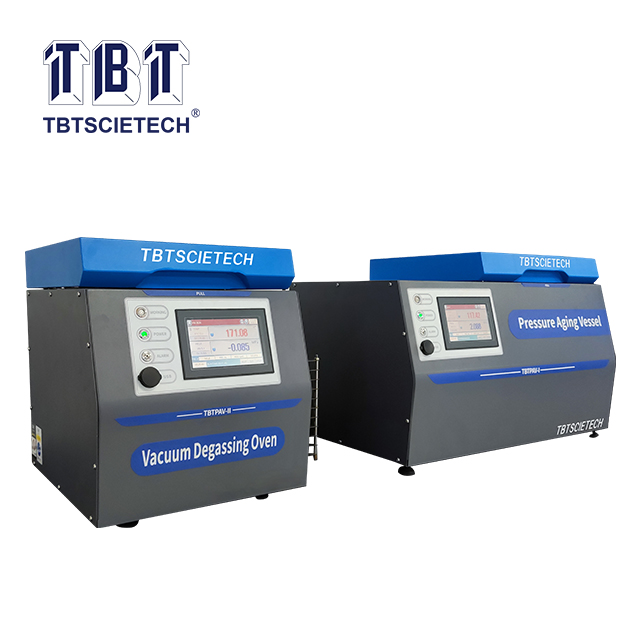
Selecting the right equipment requires balancing baseline operational needs against the benefits of fully automated, high-throughput systems. Lab managers must evaluate established industry models based on their ability to deliver consistent results, maintain thermal stability, and protect operators from high-pressure hazards.

Accurate PAV testing requires stable and uniform temperature control. PID temperature controllers help maintain the required temperature and reduce overheating during the aging cycle. The vessel should also distribute heat evenly across all sample pans so that each asphalt binder sample receives consistent aging conditions.
A major differentiator between standard and premium PAV units is thermal recovery time. When a technician loads the sample rack into the pre-heated vessel at 100°C, the introduction of room-temperature pans and the open lid causes the internal temperature to drop. Once the vessel is sealed and pressurized, the system must recover its target temperature quickly.
AASHTO and ASTM standards dictate strict time limits for this thermal recovery phase. If the vessel takes too long to return to the target temperature, the total time the binder spends at the required oxidation temperature is reduced, skewing the final results. Evaluating how quickly and smoothly a unit recovers its target temperature without overshooting is a primary consideration for procurement.
Modern PAV systems use touchscreen controls and programmable test settings to simplify operation. Technicians can select the required PG grade, and the system automatically controls preheating, pressurization, the 20-hour aging cycle, and depressurization. This automation helps reduce operator error, improve testing efficiency, and minimize manual monitoring.
Feature | Manual/Baseline PAV Systems | Automated/Premium PAV Systems |
|---|---|---|
Pressurization | Requires manual valve operation and monitoring | Electronically controlled via solenoid valves |
Data Logging | Manual recording or basic strip chart recorders | Integrated digital logging with USB/Network export |
Depressurization | Operator must manually bleed air at test completion | Automated slow-bleed sequence to prevent sample bubbling |
Profile Management | Single setpoint entered manually per test | Pre-programmed PG grade profiles stored in memory |
Pressure Aging Vessels operate under high temperature and pressure, so safety features are important. The system should include over-temperature protection, pressure relief valves, and emergency pressure protection to reduce operating risks. The pressure vessel should also meet ASME or equivalent international standards to support safe and reliable laboratory operation.
Procuring a high-quality unit is only the first step. Integrating a new PAV testing station into an existing laboratory workflow requires careful planning to avoid hidden bottlenecks and ensure seamless operation.
Footprint considerations are vital. Lab managers must decide between benchtop models, which save floor space but require sturdy, reinforced casework to support their heavy weight, and floor-standing units, which offer easier access but consume valuable real estate.
Power and air infrastructure must be audited before installation. Most commercial PAV units require dedicated 220V/240V electrical circuits to support the high-draw heating elements. The system requires a clean, dry, and highly regulated compressed air supply. Moisture or oil in the air lines will contaminate the binder samples and ruin the test. Laboratories must use high-purity bottled compressed air or a dedicated laboratory air compressor fitted with heavy-duty desiccant dryers and oil traps.
A PAV cannot function as a standalone solution; it requires a companion piece of equipment known as a Vacuum Degassing Oven (VDO). During the 20-hour high-pressure aging cycle, microscopic air bubbles become entrapped within the stiffened asphalt binder matrix.
If this aerated binder is directly poured into DSR or BBR molds, the air voids act as structural weak points, completely skewing the subsequent rheological test results. The VDO is used immediately after the PAV cycle. The aged binder is placed into the VDO at 170°C under an absolute pressure of 15 kPa. This combination of high heat and deep vacuum forces the entrapped air bubbles to expand and escape, leaving a pure, solid binder sample ready for physical property testing.
Even the most advanced automated system is susceptible to human error during sample preparation. Developing strict Standard Operating Procedures (SOPs) is essential for mitigating these risks.
Common procedural errors include incorrect sample weighing and uneven pouring. Technicians must be trained to pour exactly 50g of RTFO-aged binder into each pan. The binder must be distributed evenly across the entire bottom surface of the pan to achieve the mandatory 3.2 mm film thickness. If the binder is poured too cold, it mounds in the center. Technicians must ensure the binder is sufficiently fluid to self-level before the pans are loaded into the vessel rack.
Heat the RTFO-aged binder until it is fluid enough to pour easily, but do not exceed 163°C.
Place the stainless steel PAV pans on a perfectly level analytical balance.
Pour exactly 50.0g ± 0.5g of binder into each pan.
Allow the pans to rest on a level surface so the binder flows evenly to the edges, ensuring the 3.2 mm thickness.
Inspect each pan for air bubbles or uneven distribution before loading them into the PAV sample rack.
Audit your laboratory's compressed air infrastructure to verify it delivers clean, moisture-free air at a sustained 2.10 MPa.
Review AASHTO R28 specifications to align internal SOPs with current film thickness and thermal recovery mandates.
Request demonstration data logs from shortlisted equipment manufacturers to validate software compliance and audit trail capabilities.
Evaluate existing bench space and electrical capacity to finalize footprint and power requirements for the new installation.
A: RTFO aging simulates the short-term oxidative aging and volatile loss that occurs during asphalt plant mixing and paving construction. PAV aging simulates the long-term, in-service oxidative aging that occurs over 7 to 10 years of environmental exposure on the road. PAV testing must always be performed on samples that have already been RTFO-aged.
A: The core pressurized aging cycle takes exactly 20 hours. The total process takes longer when factoring in the time required to pre-heat the vessel, allow for thermal recovery after loading the samples, safely depressurize the chamber, and subsequently process the samples in a vacuum degassing oven.
A: The test requires a continuous pressure of 2.10 MPa. The testing temperature is typically set to 90°C, 100°C, or 110°C, depending on the specific climate-based Performance Grade (PG) of the asphalt binder being evaluated.
A: After aging and degassing, the binder is tested using a Dynamic Shear Rheometer (DSR) to evaluate intermediate-temperature fatigue cracking resistance. It is also tested using a Bending Beam Rheometer (BBR) and Direct Tension Tester (DTT) to assess low-temperature thermal cracking susceptibility.
A: During the 20-hour high-pressure PAV cycle, microscopic air bubbles become trapped inside the stiffened asphalt binder. A vacuum degassing oven applies high heat and vacuum pressure to remove these bubbles. If left in the binder, these air voids act as weak points and skew the results of subsequent rheological testing.
A: To maintain AASHTO and ASTM compliance, the temperature and pressure transducers should be calibrated at least every six months. Regular calibration ensures the equipment maintains the strict ± 0.5°C and ± 0.1 MPa tolerances required for accurate PG grading.


