
Testing Equipments Supplier
ISO9001: 2015 Certified
Views: 1 Author: Site Editor Publish Time: 2026-09-20 Origin: Site


Pavement failures, rejected material batches, and severe contract penalties represent catastrophic financial risks for any paving contractor or materials producer. The high stakes of asphalt quality control dictate that rigorous testing and premium instrumentation are fundamental risk mitigation strategies. Bringing testing operations in-house or upgrading an existing facility presents a complex operational challenge. Facility managers must balance strict regulatory compliance across AASHTO, ASTM, and State Department of Transportation (DOT) standards with significant capital expenditures and extended equipment procurement lead times.
This guide serves as a comprehensive roadmap for designing a compliant and highly efficient testing facility. We will explore how to evaluate and procure the right asphalt laboratory equipment, optimize facility infrastructure, and mitigate implementation risks. By aligning testing capabilities with project demands, organizations can accelerate data reporting, eliminate third-party bottlenecks, and ensure a rapid return on their infrastructure investment.
Compliance Drives Procurement: Equipment selection must be strictly dictated by AASHTO re:source, ASTM standards, and local DOT requirements, not just baseline functionality.
Facility Infrastructure Dictates Throughput: Proper lab layout, specialized utilities (3-phase power, compressed air), and environmental controls are just as crucial as the testing instruments themselves.
Automation Reduces Risk: Investing in automated testing systems minimizes operator variance, accelerates data reporting, and supports faster decision-making during active paving projects.
Future-Proofing is Mandatory: Facilities must account for emerging industry shifts, such as Balanced Mix Design (BMD) and high-RAP (Recycled Asphalt Pavement) integration, when selecting core machinery.
Table of Contents
Before selecting asphalt laboratory equipment, define the tests your facility needs to perform. Superpave mix design requires equipment such as gyratory compactors, while Marshall testing uses different compaction and stability equipment. Field QC labs usually focus on fast, high-volume testing, while QA and research laboratories may require more precise and advanced equipment. Also consider daily sample volume and whether the laboratory will test RAP or RAS materials, as these may require additional extraction and binder recovery equipment.
Asphalt laboratories must follow AASHTO, ASTM, and applicable State DOT testing requirements. These standards cover testing methods, equipment calibration, quality management, and test records. State DOT requirements may vary depending on local climate and materials, so laboratories should confirm the required test methods, equipment specifications, temperature ranges, and reporting formats before purchasing equipment.

Aggregate testing equipment helps laboratories evaluate the quality and durability of materials used in asphalt mixtures. Sieve shakers measure aggregate gradation, while specific gravity equipment determines density and water absorption. Los Angeles Abrasion and Micro-Deval machines evaluate resistance to wear and degradation. Drying ovens and sample splitters are also used to prepare consistent aggregate samples before testing.
Asphalt binder testing equipment measures how binders perform under different temperatures and conditions. Dynamic Shear Rheometers (DSR) evaluate rutting and fatigue cracking resistance, while Bending Beam Rheometers (BBR) test low-temperature cracking performance. Rotational Viscometers and Penetrometers measure binder flow and consistency. RTFO and PAV equipment simulate short- and long-term aging, while binder recovery systems separate aged binder from RAP and RAS for further testing.
Asphalt mix design equipment helps laboratories prepare samples and evaluate pavement performance. Superpave Gyratory Compactors (SGC) compact asphalt samples to measure properties such as air voids, while ignition ovens determine binder content in HMA. For performance testing, AMPT systems evaluate mix strength, Hamburg Wheel Trackers test rutting and moisture resistance, and BMD methods such as IDEAL-CT and SCB evaluate cracking resistance.
Field testing equipment helps confirm that asphalt placed on the road matches the laboratory mix design. Nuclear and non-nuclear density gauges measure pavement density during compaction, while intelligent compaction systems track roller passes and surface temperature. Ground-penetrating radar (GPR) can measure pavement thickness and density without damaging the surface, and core drills collect samples for final laboratory verification.
A well-equipped asphalt laboratory needs proper ventilation, stable power, compressed air, water supply, and accurate environmental controls. Fume hoods help remove hazardous vapors, while industrial balances and environmental chambers support accurate testing. Heavy equipment may require 3-phase power and dedicated compressed air lines. Laboratories should also provide suitable PPE, solvent recovery systems, and emergency eyewash stations to maintain a safe working environment.
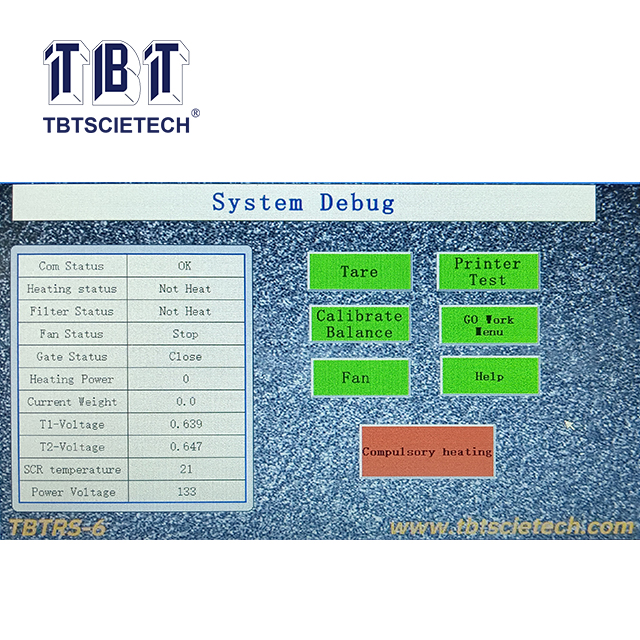
Automated testing equipment can reduce human error and improve the consistency of test results. Features such as automatic measurements, digital data logging, and LIMS integration can also simplify data transfer and reporting. When selecting equipment, prioritize automation for time-consuming testing steps and make sure the system can securely store and export test data according to DOT requirements.
Procurement strategies must account for future industry shifts. Assess equipment based on its ability to handle increased sample volumes without requiring a complete facility redesign. As state DOTs transition toward Balanced Mix Design and cold in-place recycling, labs must possess the capability to execute these new testing protocols without buying entirely new load frames.
Compare modular equipment setups against rigid, single-purpose machines. A modular testing frame that allows you to swap out load cells or add new AMPT testing modules and SCB fixtures later provides greater operational flexibility. Scalable equipment ensures your facility remains compliant and competitive as testing methodologies evolve over the next decade.
Reliable supplier support helps reduce equipment downtime. When choosing a manufacturer, consider equipment delivery times, technical support, calibration services, and the availability of replacement parts.
Also compare warranty terms and maintenance services. A higher initial equipment cost may be worthwhile if the supplier provides faster technical support and reliable spare parts.
Building an asphalt testing laboratory requires a significant initial investment. When selecting equipment, consider both the purchase price and long-term operating costs. Energy-efficient and reliable equipment can reduce electricity use, maintenance, and replacement costs.
For temporary field labs, leasing equipment may be more cost-effective. For permanent QA laboratories with regular testing needs, purchasing equipment can provide better long-term value.
Balancing the budget often involves choosing between manual devices and premium automated systems. Manual equipment offers significant initial cost savings but carries higher long-term labor costs and a greater risk of operator variance. Automated systems require less hands-on technician time, allowing staff to process multiple tests simultaneously.
Equipment Type | Initial Capital Outlay | Labor Efficiency | Operator Variance Risk | Best Application |
|---|---|---|---|---|
Standard Manual Systems | Low to Moderate | Low (Requires constant monitoring) | High | Low-volume field labs, basic QC checks |
Premium Automated Systems | High | High (Enables multi-tasking) | Low | High-volume QA labs, complex mix designs |
Identify specific tests where automation provides the highest return on investment. Ignition ovens drastically reduce the labor and chemical disposal costs associated with traditional solvent extraction. Automated Superpave Gyratory Compactors ensure precise compaction angles and pressures, eliminating the inconsistencies common with older, manual compaction methods.
Organizations must analyze the breakeven point for building an in-house Asphalt Testing Laboratory versus outsourcing material analysis to third-party engineering firms. While outsourcing avoids upfront equipment costs, it introduces severe operational vulnerabilities.
The hidden costs of outsourced testing often outweigh the expense of building a lab. Delayed test results from a third party can halt paving schedules, leading to idle crews and missed deadlines. Waiting three days for a Hamburg Wheel Tracking result means you might pave miles of defective road before identifying a stripping issue. An in-house facility provides immediate feedback, allowing plant operators to adjust mix proportions instantly and prevent costly material rejections.
Initiate a comprehensive facility space and utility audit to verify 3-phase power, compressed air capacity, and ventilation requirements before ordering heavy machinery.
Define your exact testing scope, explicitly detailing capacity requirements for high-RAP integration and upcoming Balanced Mix Design (BMD) protocols.
Request detailed equipment proposals from top-tier manufacturers, focusing strictly on automation capabilities, LIMS compatibility, and guaranteed procurement lead times.
Schedule third-party ISO 17025 calibration services concurrently with equipment delivery to prevent AASHTO re:source accreditation delays.
A: A basic QC field lab requires equipment to verify volumetric properties and binder content. Essential items include a Superpave Gyratory Compactor (SGC), an ignition oven for binder content, high-capacity drying ovens, sieve shakers for gradation, specific gravity benches, and accurate industrial balances.
A: Selection depends heavily on testing volume, state DOT variances, and automation levels. You must account for the required heavy machinery, specialized utility installations like 3-phase power, initial ISO calibration services, and necessary safety infrastructure. Premium automated systems require higher initial capital but reduce long-term labor expenses.
A: AASHTO re:source accreditation proves that a laboratory adheres to strict quality management systems and testing standards. It is legally required by most state Departments of Transportation and federal agencies for any lab submitting test data for public infrastructure projects.
A: Heavy testing equipment requires robust utilities. Facilities typically need stable 3-phase electrical power for compactors and large ovens, dedicated compressed air lines for pneumatic presses, heavy-duty fume hoods for solvent extraction, and climate-controlled rooms for sensitive binder testing instruments.
A: Calibration frequency is dictated by AASHTO and ASTM standards, alongside specific state DOT requirements. Generally, heavy machinery like compactors and presses require annual calibration, while scales, thermometers, and ovens require more frequent verification or daily standardized checks.
A: Marshall mix design is a legacy empirical method using impact compaction via drop weights to determine stability and flow. Superpave is a modern, performance-based system using a gyratory compactor to simulate real-world rolling compaction, focusing heavily on volumetric properties and climate-specific binder grading.


