
Testing Equipments Supplier
ISO9001: 2015 Certified
Views: 0 Author: Site Editor Publish Time: 2026-09-20 Origin: Site


Asphalt binder failure causes severe premature rutting, thermal cracking, and pavement fatigue. These catastrophic road construction failures trace directly back to inadequate laboratory quality control. When testing protocols fail, substandard materials reach the job site, compromising the structural integrity of the entire paving project.
Lab managers and procurement engineers face a major operational challenge. They must select reliable bitumen testing equipment that meets stringent international standards like ASTM, AASHTO, and EN. Balancing high throughput requirements with operator training overhead in busy construction labs requires careful planning. Equipment selection directly impacts daily testing capacity and overall data accuracy.
This article provides a technical evaluation framework for laboratory procurement. It helps you shortlist and procure the essential instruments required for your facility. You will learn how to build a compliant, efficient, and scalable quality control lab dedicated to better roads and long-term pavement longevity.
Standards dictate procurement: Equipment must be strictly evaluated against specific testing methodologies (e.g., ASTM D5 for penetration, ASTM D36 for softening point) rather than generic feature lists.
Automation drives throughput: Transitioning from manual to automated testing apparatuses reduces operator bias and increases repeatability, though it requires a higher initial capital expenditure.
Calibration is non-negotiable: The total cost of ownership must account for routine calibration, maintenance, and the availability of OEM spare parts to prevent laboratory downtime.
Integration matters: Modern QC labs require equipment with digital data logging and Laboratory Information Management System (LIMS) compatibility to maintain audit trails and ensure data integrity.
Table of Contents
Aligning lab capabilities with international standards is mandatory. Local paving standards often reference Superpave or Marshall mix designs. Your equipment must execute these specific testing protocols flawlessly. Regulatory compliance ensures your mix designs gain rapid approval from project stakeholders. It guarantees the final road construction meets all quality benchmarks. Non-compliant equipment leads to rejected batches at the asphalt plant. This exposes contractors to severe liability risks, wasted material costs, and massive project delays.
State and federal highway agencies conduct random audits on contractor laboratories. If your instruments lack proper certification or fail to meet ASTM/AASHTO specifications, the agency can shut down your paving operations. Investing in compliant hardware from the start prevents these regulatory roadblocks. It establishes your facility as a trusted entity in the heavy civil construction sector.
Equipment precision directly impacts your daily operations. High accuracy reduces standard deviations in your test data. This reliability prevents false batch rejections and stops substandard asphalt from reaching the job site. Consistent repeatability builds trust with project owners and government inspectors. It proves your quality control lab operates at the highest professional level.
In the field, a variance of just a few degrees in a softening point test or a few tenths of a millimeter in a penetration test can mean the difference between a passing grade and a complete mix redesign. Reliable asphalt testing forms the absolute foundation of durable pavements. When technicians can trust their instruments, they spend less time re-running questionable samples and more time optimizing mix designs for field crews.
Assess your current testing volumes carefully and compare them against future project demands. Small labs might manage with manual instruments for low sample volumes. Large-scale highway projects require high-capacity testing solutions. Automated instruments become necessary when sample loads increase rapidly during peak summer paving seasons.
Scalability ensures your lab grows alongside your operational needs. It prevents testing bottlenecks when multiple paving crews demand immediate mix verification. Proper capacity planning keeps paving crews supplied with approved materials. If your lab takes too long to verify binder properties, the batch plant sits idle, costing the contractor thousands of dollars per hour.
Equipment Category | Primary Function | Key Standards |
|---|---|---|
Penetrometers | Measures binder hardness and physical pliability. | ASTM D5, EN 1426 |
Softening Point Apparatus | Determines temperature susceptibility and softening thresholds. | ASTM D36, EN 1427 |
Ductility Testing Machines | Measures tensile properties and binder elongation. | ASTM D113, AASHTO T 51 |
Viscosity Testers | Assesses flow characteristics for mixing and compaction. | ASTM D4402, ASTM D2170 |
Rheological Testers (DSR/BBR) | Evaluates viscoelastic properties for Superpave PG grading. | AASHTO T 315, AASHTO T 313 |
Flash and Fire Point Testers | Determines binder volatility and high-temperature fire hazards. | ASTM D92, ASTM D93 |
Bitumen Extractors | Separates asphalt binder from aggregate to determine content. | ASTM D2172 |
Marshall Stability Testers | Measures resistance to plastic flow in cylindrical specimens. | ASTM D6927 |
Penetrometers measure the consistency and hardness of bitumen by recording how far a standard needle penetrates the sample under controlled temperature, load, and time. Manual models require technicians to control the test and read the result, while automatic penetrometers use electronic timing, automatic needle release, and digital measurements to reduce human error and improve test consistency according to ASTM D5 and EN 1426.
Softening point testing measures the temperature at which bitumen begins to soften under controlled conditions. In the Ring and Ball test, bitumen samples are placed in brass rings with steel balls and heated in a temperature-controlled bath. Modern equipment can automatically control the heating rate and record the softening point, helping reduce operator error and improve test consistency according to ASTM D36 and EN 1427.

Ductility testing measures how far bitumen can stretch before breaking. The prepared sample is conditioned in a temperature-controlled water bath and then pulled apart at a constant speed. Stable water temperature and accurate pulling speed are important for consistent results. Ductility testing helps evaluate binder flexibility according to ASTM D113 and AASHTO T 51.
Viscosity testers measure how easily asphalt binder flows at high temperatures, helping determine suitable mixing and compaction conditions. Rotational viscometers are commonly used for modified binders, while capillary viscometers are suitable for many standard binders. The appropriate equipment depends on the binder type, testing temperature, and applicable ASTM requirements.
Dynamic Shear Rheometers (DSR) test asphalt binder performance at high and intermediate temperatures, helping evaluate resistance to rutting and fatigue cracking. Bending Beam Rheometers (BBR) measure binder stiffness at low temperatures to evaluate thermal cracking resistance. These instruments are commonly used for Superpave Performance Grading and can test Polymer Modified Bitumen (PMB) according to relevant AASHTO standards.
Safety during asphalt production is paramount. Flash and fire point testers determine bitumen volatility. They identify dangerous fire hazards at high temperatures. The machine heats the sample at a controlled rate. A test flame passes over the sample cup at specified intervals. The flash point is the lowest temperature where the vapors ignite briefly.
Labs choose between Cleveland Open Cup (COC) and Pensky-Martens Closed Cup models. Modern testers include critical safety features for lab personnel. Automatic gas shut-off prevents accidental lab fires if the flame extinguishes. Fire detection sensors monitor the sample continuously. Automated sweep mechanisms ensure accurate flash detection without manual intervention. These units comply with ASTM D92 and ASTM D93 standards, ensuring the binder is safe to heat and mix at the plant.
Bitumen extractors separate asphalt binder from aggregate to measure binder content in asphalt mixtures. Centrifuge and vacuum extractors use solvents for separation, while ignition ovens use high temperatures to burn off the binder. Ignition ovens reduce the need for chemical solvents, while extraction methods may be preferred when binder recovery is required. The selected method should follow the applicable ASTM testing requirements.
Marshall testers measure the strength and deformation of compacted asphalt samples under load. The samples are prepared in standard molds, conditioned in a water bath, and then loaded until failure. The tester records Marshall Stability and Flow values, which help engineers evaluate asphalt mix performance and determine suitable binder content according to ASTM D6927.
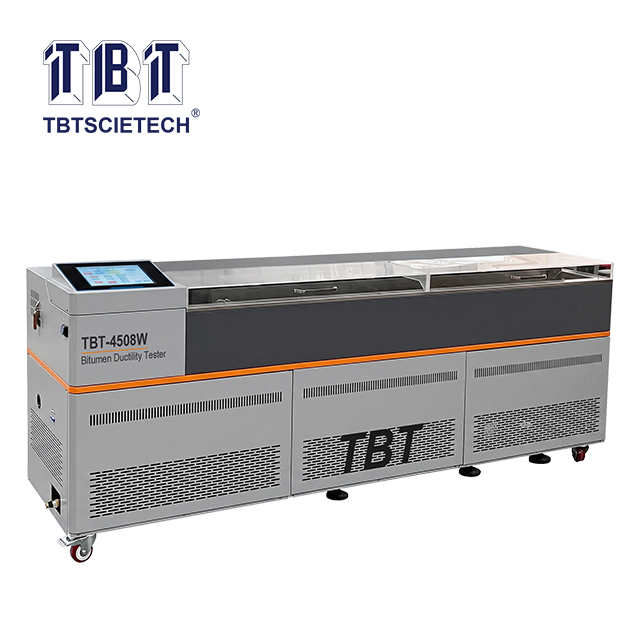
Map specific equipment features directly to testing outcomes. PID temperature controllers maintain exact heat levels during tests. This reduces standard deviation across multiple sample runs. Automated optical sensors remove human observation errors entirely. They enable faster test cycles and higher daily throughput. These precise outcomes directly guarantee better road quality. They prevent premature pavement failures by ensuring accurate mix designs.
When evaluating hardware, look past the marketing brochures. Ask how a specific feature improves your daily workflow. For example, a motorized carriage on a ductility machine doesn't just look modern; it ensures a perfectly linear pull rate that a manual crank can never achieve. This translates directly to passing proficiency samples and maintaining your lab's accreditation.
Decide when to upgrade to automated systems carefully. Base this decision on your daily sample volume. Consider the availability of skilled laboratory technicians in your region. Automated systems eliminate operator bias entirely. They handle repetitive tasks with perfect consistency.
This frees your technicians for complex data analysis and mix design planning. It streamlines your entire quality control workflow and accelerates project approvals. If your lab processes more than twenty penetration or softening point samples per day, the investment in automated equipment pays for itself rapidly through increased labor efficiency and reduced re-test rates.
Modern QC labs require robust digital data management. Bitumen Testing Equipment must feature RS232/USB ports and Ethernet connectivity. Proprietary software generates compliant, tamper-proof test reports automatically. Laboratory Information Management System (LIMS) integration is required for large facilities.
LIMS maintains historical audit trails for every single sample tested. This connectivity ensures complete data integrity during external audits and quality reviews. When a state inspector questions a batch of asphalt placed three months ago, digital records allow you to pull the exact penetration and viscosity data instantly, proving compliance and protecting your company from liability.
Manual equipment requires intensive labor hours. It increases the risk of human error during repetitive testing. Premium automated systems streamline daily laboratory workflows. They reduce repetitive manual tasks significantly. This shift improves overall laboratory efficiency and accuracy.
It allows labs to process more samples per shift with fewer technicians. Automation provides a clear operational advantage for high-volume construction projects. While the upfront capital expenditure for an automated ring and ball apparatus is higher, the reduction in technician hours and eliminated re-tests offset this cost over the first few paving seasons.
Account for the recurring physical needs of your lab. Testing requires a steady supply of specific consumables. Solvents, calibration fluids, test rings, and sample cups run out quickly. Plan your inventory to prevent unexpected testing delays.
Establish reliable supply chains for these daily necessities. Proper planning keeps your operations running smoothly without material shortages. A high-end DSR machine is useless if you run out of silicone molds or calibration standard fluids mid-season. Build a robust inventory management protocol for all testing consumables.
Select manufacturers or distributors with established local service networks. Guaranteed spare part availability is absolutely critical. Construction labs cannot afford prolonged equipment downtime. Broken instruments delay mix design approvals and halt production.
This stops entire paving projects in their tracks. Reliable vendor support ensures quick repairs and minimal disruption. It keeps your testing schedules on track during peak season. Before purchasing, ask the vendor about their average response time for field service technicians and where their nearest spare parts warehouse is located.
Equipment loses accuracy naturally over time. This calibration drift compromises all subsequent test results. It leads to faulty mix designs and rejected asphalt batches. You must monitor equipment precision continuously.
Establish strict internal verification schedules for all machines.
Use certified reference materials for daily or weekly checks.
Mandate annual third-party ISO 17025 calibration for formal compliance.
Maintain detailed calibration logs for external quality audits.
Fluctuations in lab temperature affect sensitive equipment. Vibration disrupts delicate penetrometers and ductility baths. Poor electrical grounding causes erratic sensor readings. Environmental factors ruin perfect test procedures.
Implement strict HVAC controls in your testing facility.
Maintain a constant ambient temperature year-round.
Use heavy anti-vibration tables for delicate analytical instruments.
Ensure proper grounding of all electrical equipment to prevent signal noise.
Isolate heavy compaction equipment (like Marshall hammers) away from sensitive rheometers.
Complex equipment introduces operator error risks. Untrained staff will generate inaccurate data regardless of machine quality. Advanced rheometers require deep technical understanding to operate correctly.
Require vendor-provided commissioning for all new machines.
Mandate hands-on training for every laboratory technician.
Support this training with clear Standard Operating Procedures (SOPs).
Tailor these SOPs to the specific machine model and software version.
Equipment Type | Daily Task | Weekly Task | Annual Task |
|---|---|---|---|
Penetrometer | Clean needle with solvent. | Verify water bath temperature with reference thermometer. | ISO 17025 calibration of timer and depth gauge. |
Ductility Machine | Check water level and clarity. | Lubricate carriage drive mechanism. | Calibrate pull speed and temperature sensors. |
Rotational Viscometer | Clean spindles immediately after use. | Run verification with standard viscosity fluid. | Factory calibration of torque sensor. |
Ignition Oven | Empty ash collection tray. | Inspect heating elements and door seal. | Calibrate internal load cell and temperature controller. |
The optimal suite of testing instruments depends heavily on your specific regulatory environment. Your daily testing volume and binder types dictate your final choices. Standard unmodified binders require different tools than complex polymer-modified asphalt. Procurement teams must prioritize equipment that guarantees strict standards compliance first. Next, focus on automation features that address your specific workflow bottlenecks.
Take the following steps to upgrade your quality control laboratory operations:
Audit your current lab capabilities against upcoming project requirements and standards.
Request technical data sheets and calibration certificates from shortlisted equipment vendors.
Arrange for equipment demonstrations or reference checks to verify real-world performance.
Develop machine-specific Standard Operating Procedures (SOPs) before new equipment arrives on site.
Establish a dedicated inventory management system for required testing consumables and calibration fluids.
A: A new quality control lab must prioritize foundational testing instruments. You need a penetrometer to measure binder hardness. A Ring and Ball Apparatus is required for softening point tests. A Flash Point Tester ensures safety by measuring volatility. These three instruments cover the basic regulatory requirements for standard asphalt binder classification.
A: Calibration frequency depends on the specific instrument and usage volume. Technicians should perform daily or weekly internal verifications using certified reference materials. Formal, third-party ISO 17025 calibration must occur annually. This dual approach prevents calibration drift. It ensures your lab maintains compliance with strict international testing standards.
A: Manual penetrometers rely on human timing and visual reading. This introduces operator reaction time errors. Automatic penetrometers eliminate these variables completely. They feature electronic timers and automatic needle release mechanisms. They also provide digital depth readings. These automated features ensure perfect repeatability and remove human bias from the test results.
A: Bitumen is highly temperature-susceptible. Even minor temperature fluctuations drastically alter its tensile properties. If the water bath temperature shifts, the binder will stretch differently. Strict temperature control ensures the sample behaves predictably. It guarantees your ductility test results accurately reflect the binder's true physical characteristics under standardized conditions.
A: Ignition ovens offer significant safety and environmental benefits. They burn off the binder completely, eliminating the need for toxic solvents. This removes hazardous chemical exposure and simplifies disposal logistics. Centrifuge extractors require solvents, which complicates lab safety protocols. Many modern labs prefer ignition ovens for their efficiency and cleaner operation.
A: Standard equipment often struggles with Polymer Modified Bitumen. PMBs possess complex rheological properties. They require specialized testing instruments. You need Dynamic Shear Rheometers (DSR) or specific rotational viscometers to evaluate PMBs accurately. These advanced machines apply precise shear forces. They measure the unique viscoelastic behavior of modified binders effectively.


