Testing Equipments Supplier
ISO9001: 2015 Certified
Views: 4 Author: Site Editor Publish Time: 2026-07-10 Origin: Site


How can you ensure your road project’s pavement is strong and durable? Falling Weight Deflectometers (FWDs) provide crucial data for this. Choosing the right FWD and a reliable falling weight deflectometer supplier is key.
In this post, you’ll learn about FWD technology, its role in pavement evaluation, and how to select the best supplier. We’ll guide you to make informed decisions for project success.
Table of Contents
Selecting the right falling weight deflectometer (FWD) for your road project is crucial for accurate pavement testing and analysis. Here are the essential factors to guide your falling weight deflectometer selection criteria:
Every road project has unique needs. Determine the pavement type, expected traffic loads, and testing scope. For example, flexible asphalt pavements may require different load capacities and sensor configurations compared to rigid concrete pavements. Clarifying these requirements upfront ensures the deflectometer you choose aligns well with your project's goals.
The FWD must deliver loads representative of actual traffic conditions. Typical impulse loads range from 6.7 to 120 kN (1,500 to 27,000 lbf). Choose a device with adjustable load capacities to simulate different vehicle weights accurately. This flexibility is vital for pavement deflection testing since applying the correct load impacts data reliability.
The number and placement of sensors affect the quality of deflection data. A common configuration includes seven to nine sensors positioned at varying distances from the load plate to capture the deflection basin. High-precision sensors, such as geophones or accelerometers, improve measurement accuracy. Ensure the supplier offers calibration services to maintain sensor reliability over time.
FWD equipment should be easy to transport and operate on-site, especially in remote or challenging environments. Compact, trailer-mounted systems with user-friendly controls reduce setup time and minimize traffic disruptions during testing. Consider the operator training and support provided by the falling weight deflectometer supplier to maximize operational efficiency.
Modern FWDs come with advanced data acquisition systems and analysis software. Look for features such as real-time data visualization, automated report generation, and compatibility with mechanistic-empirical pavement design tools. These capabilities streamline pavement testing and facilitate informed decision-making.
Regular maintenance and calibration are essential to keep deflectometer testing equipment accurate. Choose a supplier that provides comprehensive after-sales support, including training, calibration services, and prompt technical assistance. This partnership ensures long-term reliability and effective use of your investment.
While cost is important, focus on value rather than just price. Investing in a high-quality FWD with robust features and reliable support often results in better data and fewer operational issues. Balance your budget with the device’s capabilities, maintenance costs, and the supplier’s reputation.
Tip: When evaluating falling weight deflectometer suppliers, prioritize those offering flexible load ranges, precise sensor calibration, and strong technical support to ensure accurate and reliable road quality testing.
When selecting road testing equipment, understanding the different deflection testing methods is essential. Each method offers unique features and implications for pavement testing quality and efficiency. Here’s a breakdown of the primary deflection testing methods and why impulse loading with falling weight deflectometers (FWDs) is often the best choice for road projects.
Static loading devices, such as the Benkelman beam, apply a steady load to the pavement and measure deflection as the pavement rebounds. This method is simple and inexpensive but has significant drawbacks:
Limited Data: It only measures maximum surface deflection, not the full deflection basin.
Labor-Intensive: Requires stopping traffic and manual operation, slowing the testing process.
Lower Accuracy: Does not simulate actual traffic loading conditions well.
Because of these limitations, static loading devices are less suitable for comprehensive pavement testing in modern road projects.
Steady-state loading applies a constant vibration force to the pavement, measuring deflections with velocity transducers. This method can capture deflection basins and is gentler on thinner pavements. Benefits include:
Deflection Basin Measurement: Allows for better structural analysis.
Suitable for Thin Pavements: Lower load levels reduce the risk of damage.
However, steady-state loading equipment still requires traffic control and may not represent dynamic traffic loads accurately.
Impulse loading uses a dropped weight to apply a short, dynamic load pulse, closely simulating real traffic conditions. Falling weight deflectometers are impulse loading devices specifically designed for pavement testing. Their key features include:
Full Deflection Basin Data: Multiple sensors capture deflections at various distances.
Adjustable Load Levels: Simulate different vehicle weights effectively.
Rapid Testing: Allows for quick data collection, minimizing traffic disruption.
FWDs have become the industry standard for road quality testing because they combine accuracy, efficiency, and realistic load simulation. Their advantages are:
Comprehensive Structural Evaluation: Enables backcalculation of pavement layer moduli.
Versatility: Suitable for flexible and rigid pavements.
Data Integration: Compatible with advanced software for pavement design and analysis.
Operational Efficiency: Portable and easy to operate in various field conditions.
Choosing an impulse loading FWD from a reputable falling weight deflectometer supplier ensures reliable pavement deflection testing that supports informed decision-making for road construction and maintenance.
Tip: When evaluating road construction deflectometer selection, prioritize impulse loading falling weight deflectometers for their accurate simulation of traffic loads and comprehensive deflection basin measurement.
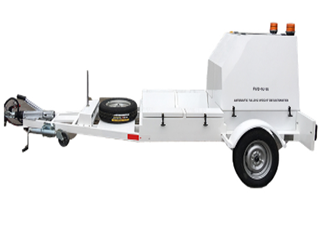
Choosing the right falling weight deflectometer supplier is as important as selecting the deflectometer itself. A reliable supplier ensures you get quality road project testing tools and ongoing support for your pavement testing needs. Here are key points to evaluate when selecting a supplier.
Look for suppliers with a solid track record in providing deflectometer testing equipment. Experienced suppliers understand road construction deflectometer selection and can recommend the best falling weight deflectometer for road testing based on your project specifics. Check for client testimonials, case studies, and industry certifications to gauge their credibility.
Effective use of falling weight deflectometers requires skilled operators. A good supplier offers comprehensive training programs and technical support to help your team operate the equipment efficiently. This support reduces downtime and improves data quality, crucial for accurate pavement deflection testing.
Regular deflectometer calibration is vital for maintaining measurement accuracy. Choose a supplier that provides calibration and certification services compliant with industry standards. This ensures your deflectometer features for road projects remain reliable over time, supporting consistent road quality testing.
Every road project has unique requirements. Suppliers who offer customization—such as adjustable load capacities, sensor configurations, or software tailored to your pavement testing protocols—add significant value. Custom solutions can improve testing accuracy and streamline data analysis, aligning with your project's goals.
Tip: Prioritize falling weight deflectometer suppliers that combine proven industry experience with robust technical support and calibration services to maximize the effectiveness of your pavement testing program.
Interpreting deflection data from a falling weight deflectometer (FWD) is essential for assessing pavement structural adequacy and guiding road project decisions. The data collected through pavement deflection testing reveal how well the pavement layers and subgrade respond to traffic loads, enabling engineers to design effective maintenance and rehabilitation strategies.
When an impulse load is applied, the FWD measures surface deflections at multiple points, creating a deflection basin. This basin represents the pavement’s elastic response and highlights areas of weakness. Larger deflections generally indicate weaker pavement structures or subgrade support, signaling potential distress. By analyzing these deflections, engineers can determine if the pavement can safely carry expected traffic loads or if strengthening is necessary.
One of the most valuable applications of FWD data is backcalculation, a process that estimates the elastic moduli of individual pavement layers and the subgrade. This involves matching measured deflections with theoretical pavement responses using layered elastic theory. Accurate backcalculation helps quantify layer stiffness, which is critical for:
Designing overlays and rehabilitation thicknesses.
Predicting pavement performance and remaining service life.
Selecting appropriate materials for repair.
Different backcalculation methods exist for flexible and rigid pavements, and choosing the right approach depends on the pavement type and project goals.
The shape and spread of the deflection basin provide insights into pavement health beyond maximum deflection alone. Parameters such as:
AREA method: Quantifies the normalized area under the deflection curve to characterize pavement structure.
Base Layer Index (BLI), Middle Layer Index (MLI), and Lower Layer Index (LLI): Indicate the condition of base, subbase, and subgrade layers respectively.
Radius of Curvature (RoC): Reflects surface and base layer stiffness.
These indices help pinpoint specific layer deficiencies and guide targeted maintenance.
In rigid pavements, LTE measures how effectively joints or cracks transfer load between slabs. FWD testing applies load on one slab and measures deflections on both loaded and unloaded slabs. High LTE values (above 90%) indicate good load transfer, while low values suggest joint deterioration.
Void detection under concrete slabs identifies loss of support, which can cause faulting and cracking. By analyzing corner deflections at multiple load levels, engineers can detect voids early and plan timely repairs.
Tip: Use comprehensive FWD deflection data, including backcalculation and load transfer analysis, to make informed pavement design and maintenance decisions that extend road life and optimize budget use.
Implementing falling weight deflectometer (FWD) testing effectively is essential to ensure accurate pavement deflection testing results on road projects. Here are practical guidelines covering sensor configurations, load levels, testing locations, temperature effects, and safety considerations.
For comprehensive pavement evaluation, use a sensor array that captures a full deflection basin. The Long-Term Pavement Performance (LTPP) program recommends a nine-sensor configuration, with sensors placed at precise distances from the load plate, such as 0, 203, 305, 457, 610, 914, 1,219, 1,524, and −305 mm. This setup allows detailed analysis, including load transfer efficiency and void detection.
Load levels should simulate actual traffic loads. For flexible asphalt pavements, multiple drops at different loads—typically 27, 40, and 53 kN—are recommended. For rigid concrete pavements, the focus is on 40 and 53 kN drops. A seating drop is also advised before testing to condition the pavement surface. Multiple drops at each load level improve data reliability and help identify nonlinear material behavior.
Testing should be conducted primarily in the outer traffic lane to minimize disruption. For multi-lane roads, consider staggered testing across lanes if traffic volumes are similar. Flexible pavements require basin tests at midlane and outer wheel paths. Rigid pavements need additional joint and corner testing to assess load transfer and slab support.
Testing intervals depend on project scope. Network-level evaluations may use 2 to 3 test points per mile, while project-level testing demands closer spacing—typically 7.5 to 15 meters (25 to 50 feet). Ensure at least 12 to 15 tests per uniform pavement section for meaningful analysis.
Temperature significantly influences pavement stiffness and deflection measurements. For asphalt pavements, record air, surface, and in-depth pavement temperatures during testing. Correcting backcalculated moduli to a standard temperature (usually 21°C) ensures consistent comparisons.
For concrete pavements, test during cooler ambient conditions—ideally below 27°C—to minimize slab curling and joint lockup effects. Avoid early morning or midday testing when temperature gradients can distort deflection readings. Seasonal moisture variations also affect subgrade support, so consider seasonal timing when scheduling tests.
FWD testing involves heavy equipment and operations near moving traffic. Implement proper traffic control measures, including signage, barriers, and flaggers, following local regulations. Operators should be trained in equipment handling and work zone safety protocols to reduce hazards.
Plan testing schedules to minimize lane closures and traffic disruptions. Portable, trailer-mounted FWD systems with quick setup features can improve safety by reducing exposure time in traffic lanes.
Tip: Always align your falling weight deflectometer supplier’s equipment capabilities with these practical testing guidelines to ensure efficient, safe, and accurate pavement testing results on your road projects.
Using a falling weight deflectometer (FWD) for pavement testing comes with challenges that can affect the accuracy and reliability of your road quality testing. Understanding these common issues and how to address them helps maximize the benefits of your investment in deflectometer testing equipment.
Deflection errors often arise from poor sensor contact or pavement surface irregularities. For example, if a deflection sensor does not return to zero quickly after the load, it may indicate poor seating or sensor malfunction. Similarly, load measurement errors can occur if the load plate does not sit flat or if there is debris under it. To resolve these:
Ensure sensors and load plates are clean and firmly seated.
Inspect sensor holders and springs for wear or looseness.
Repeat tests if errors occur, repositioning the FWD slightly if needed.
Accept data with caution if errors persist, noting the issue for analysis.
Regular maintenance and calibration by your falling weight deflectometer supplier also reduce measurement errors.
Pavements are not uniform; cracks, joints, and varying subgrade stiffness can cause inconsistent deflection readings. Testing near cracks or distressed areas may produce higher deflections, while stiff layers or high water tables can cause variability. To manage this:
Select test locations carefully, avoiding obvious distress unless specifically assessing damage.
Conduct multiple drops at each location to identify anomalies.
Use comprehensive sensor configurations to capture the full deflection basin.
Incorporate engineering judgment when interpreting data to account for variability.
Calibration is critical for accurate load and deflection measurements. Without it, data may be unreliable, leading to poor pavement design decisions. Best practices include:
Annual calibration of load cells and deflection sensors by certified technicians.
Monthly relative calibration using manufacturer-provided stands.
Calibration after any sensor replacement or repair.
Choosing a falling weight deflectometer supplier who offers calibration and certification services.
Proper calibration ensures your deflectometer features for road projects remain effective over time.
Environmental factors such as temperature, moisture, and traffic impact FWD testing. For example, high pavement temperatures soften asphalt, increasing deflections, while frozen subgrades reduce them. Operational challenges include working safely near traffic and minimizing lane closures. Solutions include:
Scheduling tests during optimal temperature windows and recording temperature data for corrections.
Implementing effective traffic control and safety protocols.
Using portable, easy-to-operate FWD systems to reduce setup time.
Training operators on environmental impacts and safety measures.
By anticipating these factors, you improve data consistency and testing efficiency.
Tip: Partner with a falling weight deflectometer supplier who provides thorough training, regular calibration services, and responsive technical support to overcome common testing challenges and ensure reliable pavement deflection testing.
Choosing the right falling weight deflectometer involves evaluating load capacity, sensor accuracy, and ease of use. Aligning supplier support and customization options with your project ensures optimal testing outcomes. Reliable calibration and technical assistance maximize data quality and operational efficiency. Partnering with a reputable supplier enhances road project success through accurate pavement analysis. Nanjing T-Bota scietech Instruments & Equipment Co.,Ltd. offers advanced FWD solutions with robust features and dedicated support, delivering valuable, precise testing for your pavement needs.
A: When selecting a falling weight deflectometer supplier, consider their experience in road construction deflectometer selection, availability of calibration and maintenance services, and technical support. A reliable supplier offers equipment with adjustable load capacities, precise sensor configurations, and advanced data acquisition software, ensuring accurate pavement deflection testing tailored to your project needs.
A: Key features include adjustable load ranges to simulate traffic loads, multiple high-precision sensors for full deflection basin measurement, portability for field conditions, and user-friendly software for data analysis. Your falling weight deflectometer supplier should also provide calibration services to maintain testing accuracy over time.
A: Calibration ensures the deflectometer’s sensors and load cells provide accurate measurements critical for reliable pavement testing. A supplier offering regular calibration and certification services helps maintain data quality and supports effective pavement design and maintenance decisions.
A: Proper maintenance, including sensor inspection and calibration, prevents measurement errors and equipment downtime. Partnering with a falling weight deflectometer supplier that provides maintenance tips and technical support ensures consistent, high-quality pavement deflection testing throughout your project lifecycle.
A: Costs depend on equipment features, load capacity, sensor configuration, software capabilities, and after-sales support. Prioritize value by selecting a supplier offering durable, accurate deflectometer testing equipment with comprehensive training and maintenance services, balancing budget with long-term road project testing needs.